Arin und der Drache
The rule that made it work: the agent that diagnoses must not be the agent that repairs.
Challenge
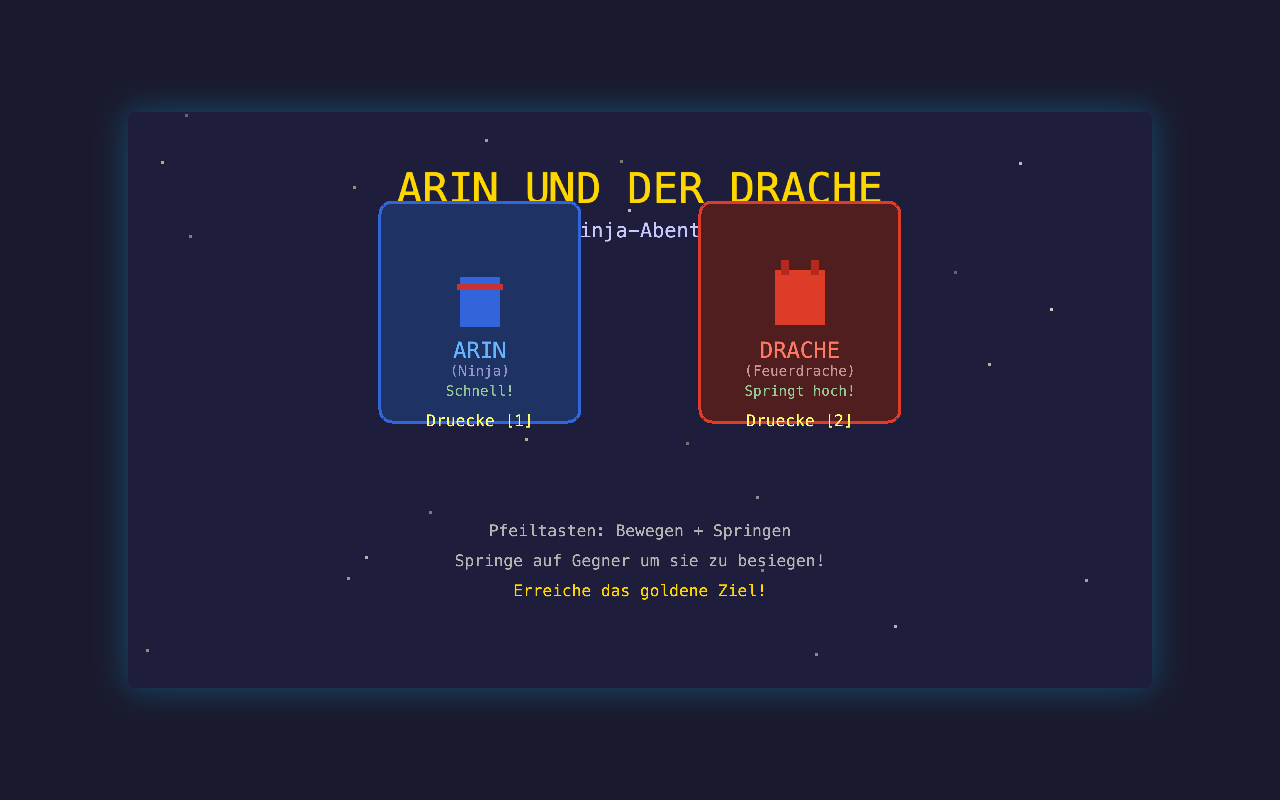
My son is six. He invented a game, a platformer with a character called Arin, a dragon, and enemies borrowed from the cartoon he was watching that month. He wanted to play it rather than look at a drawing of it.
The interesting constraint was social rather than technical. He needed to watch the thing get made, understand roughly what was happening, and have his opinions change the outcome. So the process had to be visible and slow enough to narrate, and the people doing the work could not be people, because I had one afternoon.
I set up three agents with defined roles and ran a real development process in front of him. One afternoon, 6 March 2026, about 500 lines of Kaboom.js.
Play Arin und der Drache — opens in a new tab, keyboard controls, desktop only.
The team and my role
Three agents, and the two of us as the CEOs.
The Product Manager takes a feature idea from the CEOs, asks questions when it is unclear, and writes a spec with a user story, acceptance criteria, technical requirements and an explicit must-have / nice-to-have split. Its instructions include one line I am fond of: keep the specs simple enough for a six-year-old.
The Developer implements against a spec or a bug report. It reads the relevant files first, makes the change, comments in German so the code stays legible to us, and changes nothing beyond what was asked.
QA runs in two modes. In analysis mode it takes a bug, usually a screenshot from whichever CEO found it, reads the code, locates the cause with line numbers and writes a report with a root cause and a proposed fix. In verification mode it reads what the developer changed, checks it against the requirement, and hunts for edge cases.
I designed the three roles and ran the loop. My co-CEO had the ideas, found the bugs, and decided when something was good.
The rule that makes the team a team
Key learning: the agent that diagnoses must not be the agent that repairs. QA’s brief says it explicitly: find the root cause, do not fix it yourself, that is the developer’s job. This instruction changed the quality of the output more than any other. An agent asked to find and fix a bug in one pass will do both at once, badly, and the fix arrives entangled with a diagnosis nobody can check. Splitting them forces QA to write the diagnosis down as a report, with line numbers, a root cause and a proposed approach, before any code moves. A human who is not reading the diff can review that report, and in this case that human included a six-year-old asking why the thing broke.
Two loops, deliberately different
A new feature runs CEO idea, PM spec, developer, QA, CEO approval. A bug runs CEO report, QA analysis, developer fix, QA verification, CEO confirms. The bug loop puts QA first, before any code is touched, which is the same separation rule applied at the level of the process rather than the role.
An escalation ladder as a cost control
Four levels, written down in advance. Level one: fix it yourself, for small and obvious things. Level two: one agent, for a mid-complexity bug or a single feature. Level three: the whole team, for large features, complex bugs and architectural changes. Level four: outside the system entirely, meaning the Kaboom.js documentation or a human who knows.
Key learning: deciding the escalation level before starting is what stops the team becoming ceremony. The failure mode of a multi-agent setup is running the full loop for a one-line change, at which point the process costs more than the work. Naming the levels up front made “this is a level one, I’ll just do it” an acceptable outcome rather than an admission that the system was overbuilt.
Templates, because a six-year-old files bugs
Bug reports and feature requests have templates: description, reproduction steps, expected versus actual, screenshot, priority. That sounds like process theatre for a project this size. In practice it is what let a child participate. “What did you expect to happen, and what happened instead” is a question a six-year-old can answer precisely, and that answer is most of a good bug report.
What I left out
There is no CEO agent, no CPO agent and no CTO agent, and the omission is as informative as what I built. Strategic roles work through judgement, taste and accountability, and an agent role-playing one of them adds an org chart without adding any of the three. The two humans hold those roles here. The agents do the work that has a definition of done.
The role prompts are also short. Each is a paragraph of purpose, a numbered list of what to do, and a line about what not to do. The instruction that did the most work in the whole setup is four words long: do not fix it.
Outcome
The game runs and my son played it, which was the whole deliverable.
The honest scope: one afternoon, roughly 500 lines of JavaScript, no version control, and the full three-agent loop is documented running end to end exactly once. Everything else on the day was level one and level two work. It is a demonstration of a way of working rather than a codebase, and inflating it into anything more would cost more credibility than it could buy.
The separation rule is what travels out of it. “The thing that finds the problem must not be the thing that fixes it” holds well outside agent teams, for the same reason the evidence standard on the cycling project works: a finding that has to survive being written down for somebody else is a better finding.
The other thing travels smaller and I did not expect it. Explaining a spec to a six-year-old is the fastest test of whether the spec is any good.
Five months later
The game from March worked. Run, jump, land on an enemy to beat it, collect stars, reach the flag: all of it functioned. It also looked like debug output. Every character, tile and hazard was one flat rectangle on a dead navy background. One afternoon had room for logic. It had none left for how any of it looked.
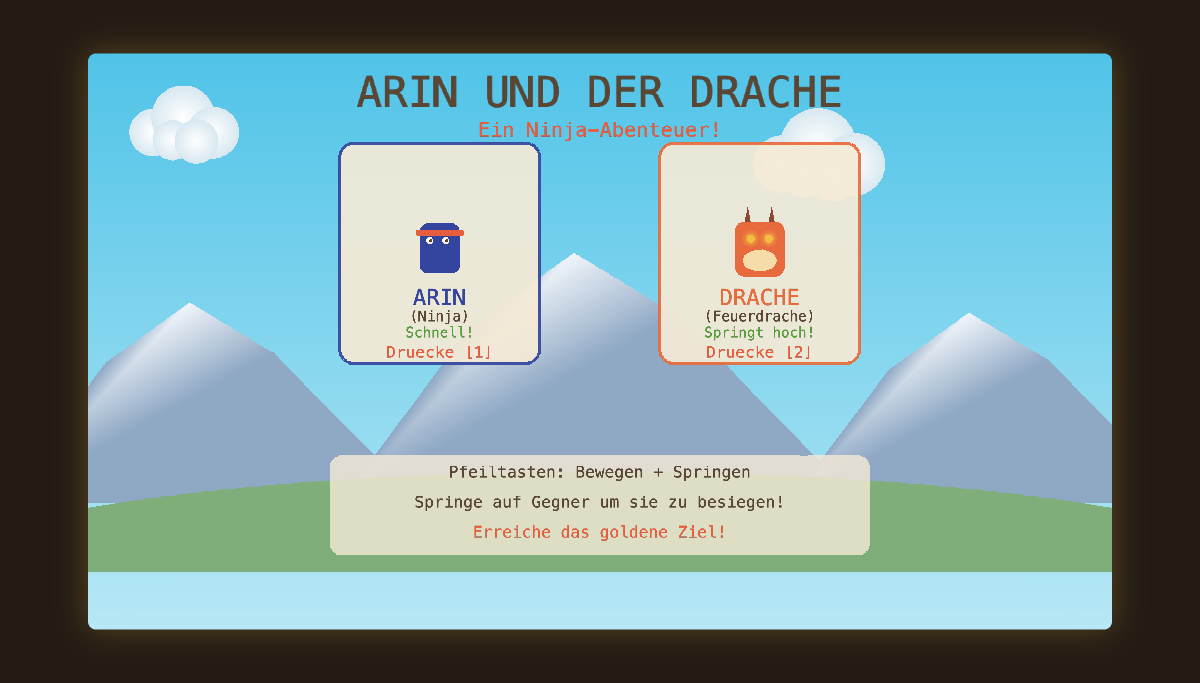
Five months on I came back to it and set a new brief: four Studio Ghibli reference images, a meadow under snow peaks, a turquoise tulip field, a gouache house under blossom trees at dusk, a lantern-lit bathhouse alley. No two of them share a time of day. Turn what they have in common into rules precise enough that a later session, possibly with no memory of the pictures, could extend the game and still land in the same world.
A styleguide instead of a memory
Five rules don’t answer what colour grass is. A styleguide does, but only if a later phase can read
it instead of trusting a description of pictures it never saw. Two files went in before any game
code changed. STYLEGUIDE.md holds the five rules, a named colour palette in place of raw hex
values, and a checklist a phase can run against its own work before calling something finished.
style.js turns the palette and sixteen shared drawing functions into code, so every phase after the
first draws mountains, glow and idle breathing the same way instead of reinventing them.
Key learning: the point of writing a styleguide to disk isn’t outliving the calendar. It’s outliving the next context window. Each phase starts with no memory of the last one. The file is what carries the direction forward, not the model.
The level only a six-year-old could approve
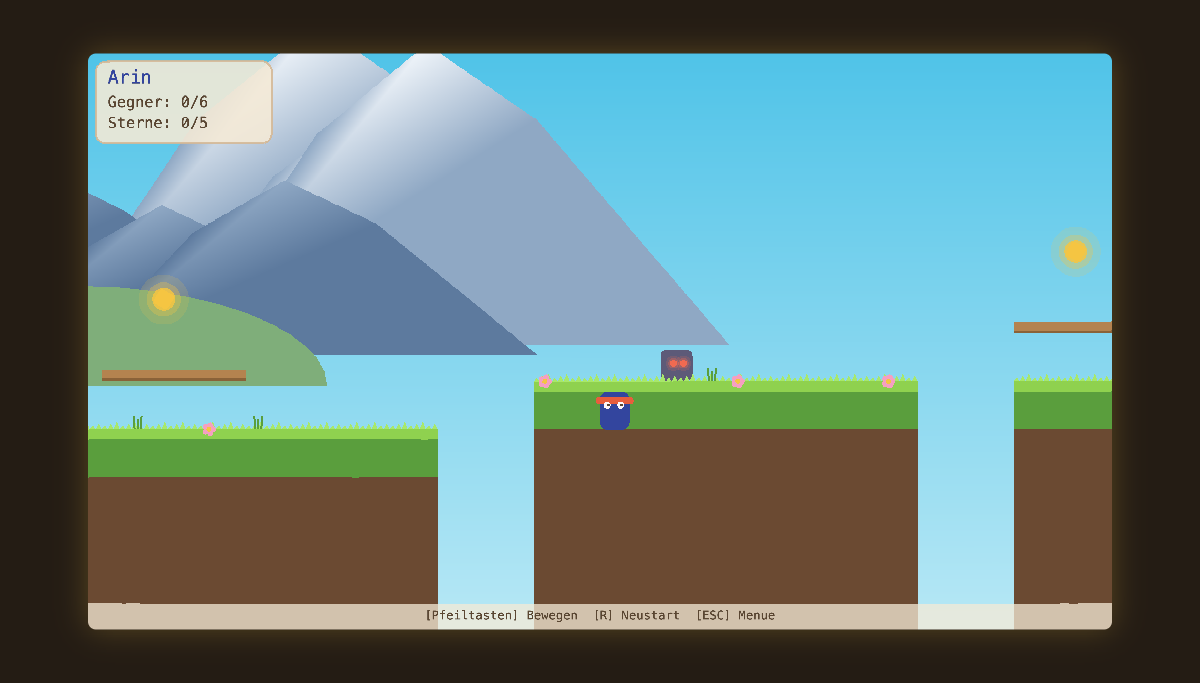
The build ran in five phases inside one continuous session: a straight recolour first, then a parallax sky with drifting cloud layers, then the level itself. A dense maze got rebuilt into an open, rolling landscape with jump gaps sized against the game’s actual jump-height and speed constants instead of eyeballed. That third phase is the one change nothing in the session could fully check on its own. A level either feels fun to a six-year-old or it doesn’t. We played the new layout together before the next phase touched anything else.
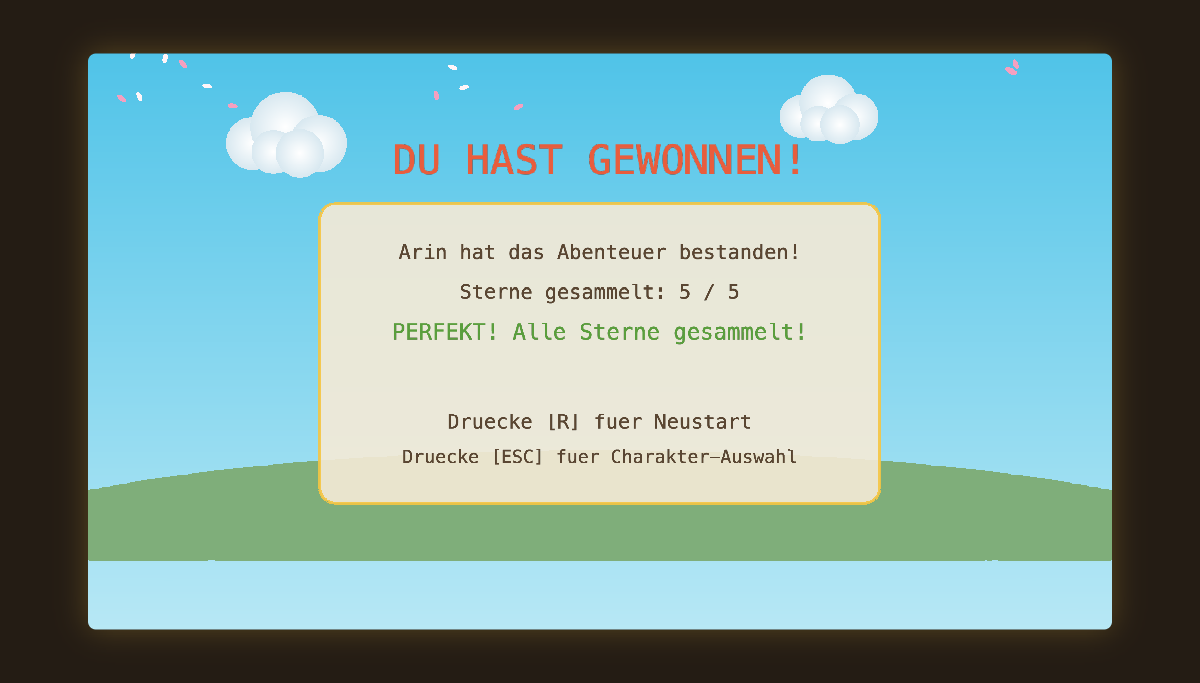
The last two phases redrew both characters with rounded shapes, idle breathing and a directional glance, then rebuilt every remaining screen, start, victory, defeat, on the same sky-and-parallax system as the game itself.
The bug that needed a player, not a script
Two phases after the visual work wrapped, actually playing it turned up two things that looked unrelated. The whole world jittered slightly, and landing on an enemy to beat it felt like a coin flip instead of a skill.
They shared one cause. The character phase had wired a breathing, squash-and-stretch animation straight onto the player’s scale, including a constant idle pulse while just standing still. The game engine computes its actual collision shape from an object’s full transform: position, angle and scale together. The player’s hitbox had been quietly resizing every frame, even at rest, and finding that meant reading the engine’s own source rather than guessing from the symptoms.
Key learning: two symptoms that look unrelated are worth checking against one shared cause before you go fix two separate things.
The fix split the player into an invisible hitbox that stays permanently unscaled for physics, and a separate drawing pass that applies the squash and stretch to pixels only. A camera-smoothing pass went in as a second line of defence. Verified against the engine’s own per-frame update loop, not by eye: zero pixels of frame-to-frame drift across ninety frames at rest, down from a jump of almost two pixels before the fix. Five repeated top-hits on an enemy, five clean kills. Five repeated side-hits, five clean hits taken.
What ran differently this time
March ran on three role-played agents with a diagnose/repair split built into the roles on purpose: QA finds the cause, the developer fixes it, never the same one doing both. This pass ran on one continuous session instead, with a different rule doing roughly the same job: plan on one model, build on another. One model read all four reference images and the existing code, checked the game engine’s API against its real source rather than trusting memory, and wrote the styleguide and the five-phase plan for approval before a line of game code changed. The other built all five phases, then investigated the bug two phases later by reading the engine’s minified source directly instead of patching around the symptom.
My part stayed the same shape as March, one level down. I chose the four reference images and called what they had in common the direction. I approved the plan before any code moved. I played the new level layout with my son before the next phase started, and I’m the one who played the finished build and reported a jitter and an unfair-feeling fight in the same message. Those turned out to be one bug, not two. No line of the visual system or the fix is mine. Which four pictures said this and not that, and which of two symptoms were worth chasing as one cause: both of those were.
Outcome, five months on
The game runs, looks like somewhere rather than nowhere, and the bug that made combat feel random is gone, checked against ninety frames of measurement rather than a few rounds of “seems fine now.” The honest scope: this pass wasn’t the three-agent structure the March write-up describes, and it wasn’t “weeks apart” either. Styleguide to fix ran inside a single sitting. What carried over from March wasn’t the org chart. It was the habit underneath it: put the thing that has to survive between sessions into a file, and check it against the source before you believe it.